The Morocco travel experience
A Morocco travel experience isn't a checklist of monuments. It's a sensory country — colours, calls to prayer, spices, silence in the dunes — where the way you travel matters as much as where you go.
A journey that begins with the senses
Travelling in Morocco isn't first about seeing — it's about feeling. The scent of cedar in a Fès riad, cumin and saffron drifting from a souk stall, the mineral silence of the Sahara at sunset. Each region has its own sensory signature, and a well-designed Morocco travel experience plays on that contrast rather than piling up sights.
Our travellers usually notice it around day three: they've slowed down, they listen more, they taste differently. That's where the real journey begins.
The Sahara: the quietest night of your life
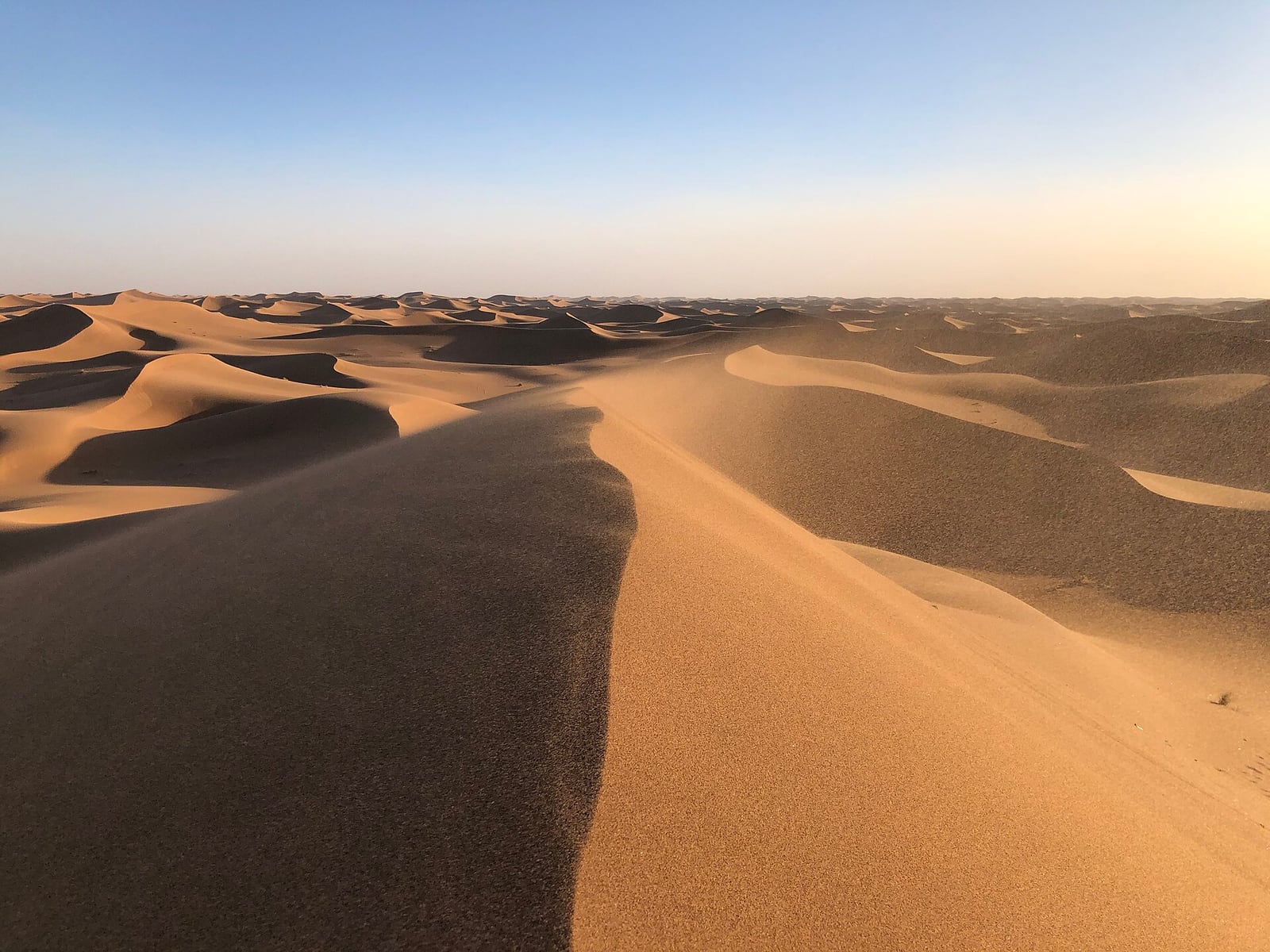
No photograph prepares you for your first night in the desert. Four hours of piste from M'Hamid brings you to Erg Chigaga — one of the last great untouched ergs of the Moroccan Sahara. The private camp is already set: Berber tents, rugs, candles, dinner under the stars.
The silence, this far from any road, is physical. You can hear it. And in the early morning, a short camel ride takes you to the top of a dune to watch the sunrise paint the horizon rose, then gold.
Fès, Marrakech, Chefchaouen: medinas read like a book
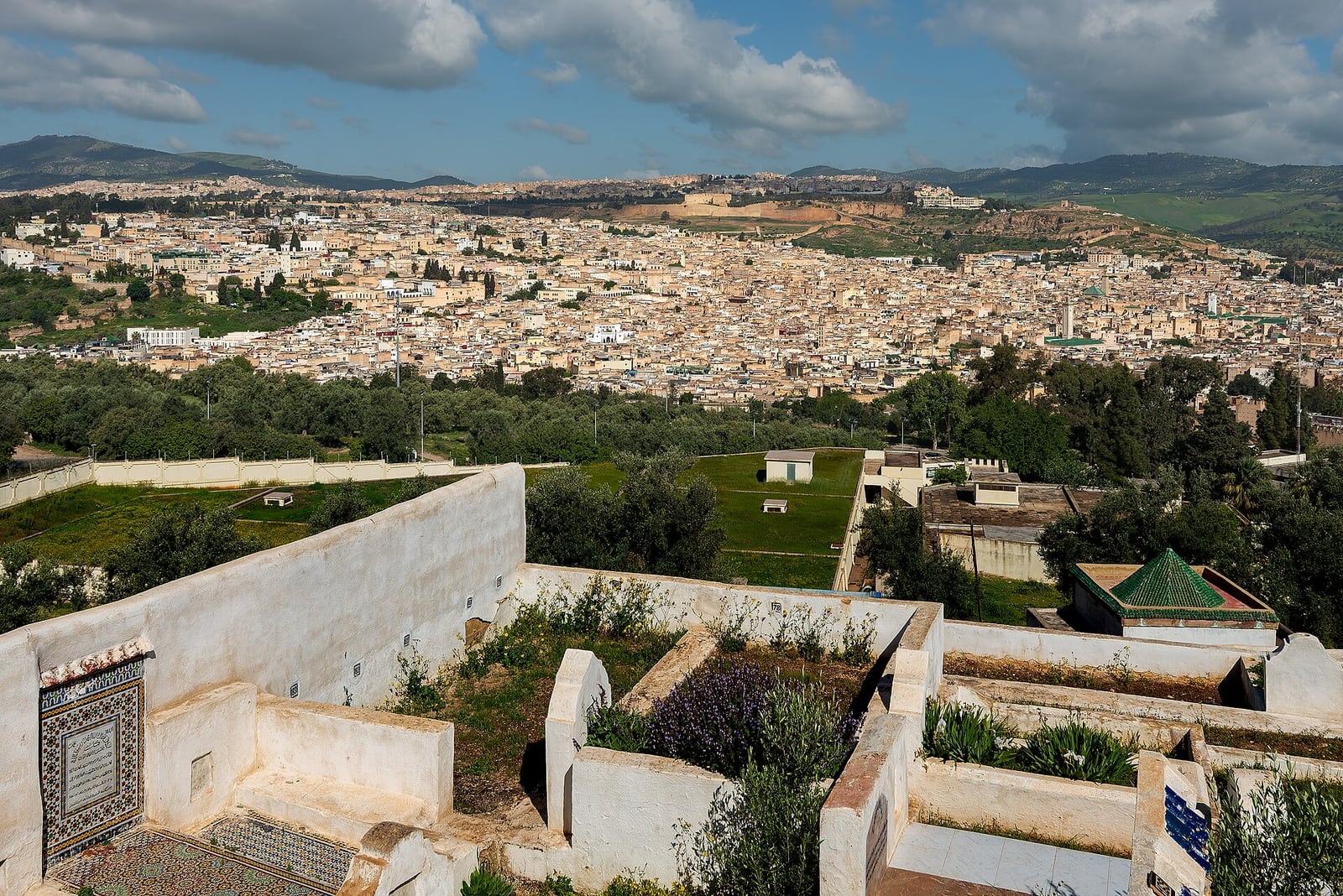
A medina isn't a backdrop — it's a living, thousand-year-old city. Fès el-Bali remains the largest car-free urban area in the world, and without a historian guide you only see the surface. Ours open doors closed to the public — a 14th-century fondouk, a master tanner's workshop, a Marinid madrasa.
In Marrakech, Jemaa el-Fna changes character three times in a single day. In Chefchaouen, the blue alleys hide weaving workshops descended from Andalusians who arrived in the 15th century. Each medina tells a different layer of Moroccan history.
The High Atlas: the Morocco you don't expect
An hour from Marrakech, a different country begins. The Berber valleys of Ourika, Ouirgane and Aït Bouguemez open onto alpine landscapes, pisé villages clinging to the slopes, and Amazigh hospitality that has not been diluted. You sleep in boutique lodges, walk with local mountain guides, share tea in a family home.
For travellers who want to understand Morocco beyond the postcards, the Atlas is essential.
The Moroccan table: more than a tagine
Moroccan cuisine is one of the most refined in the Arab world — an Andalusian, Berber and sub-Saharan heritage blended over eight centuries. A lamb tagine with prunes, a pigeon pastilla, a mechoui slow-cooked in desert sand, a saffron-scented harira: each dish tells a geography.
We arrange cooking classes with private chefs in Marrakech and Fès, family dinners in the Atlas, and argan oil tastings directly with women's cooperatives in the Souss.
How long should you plan for?
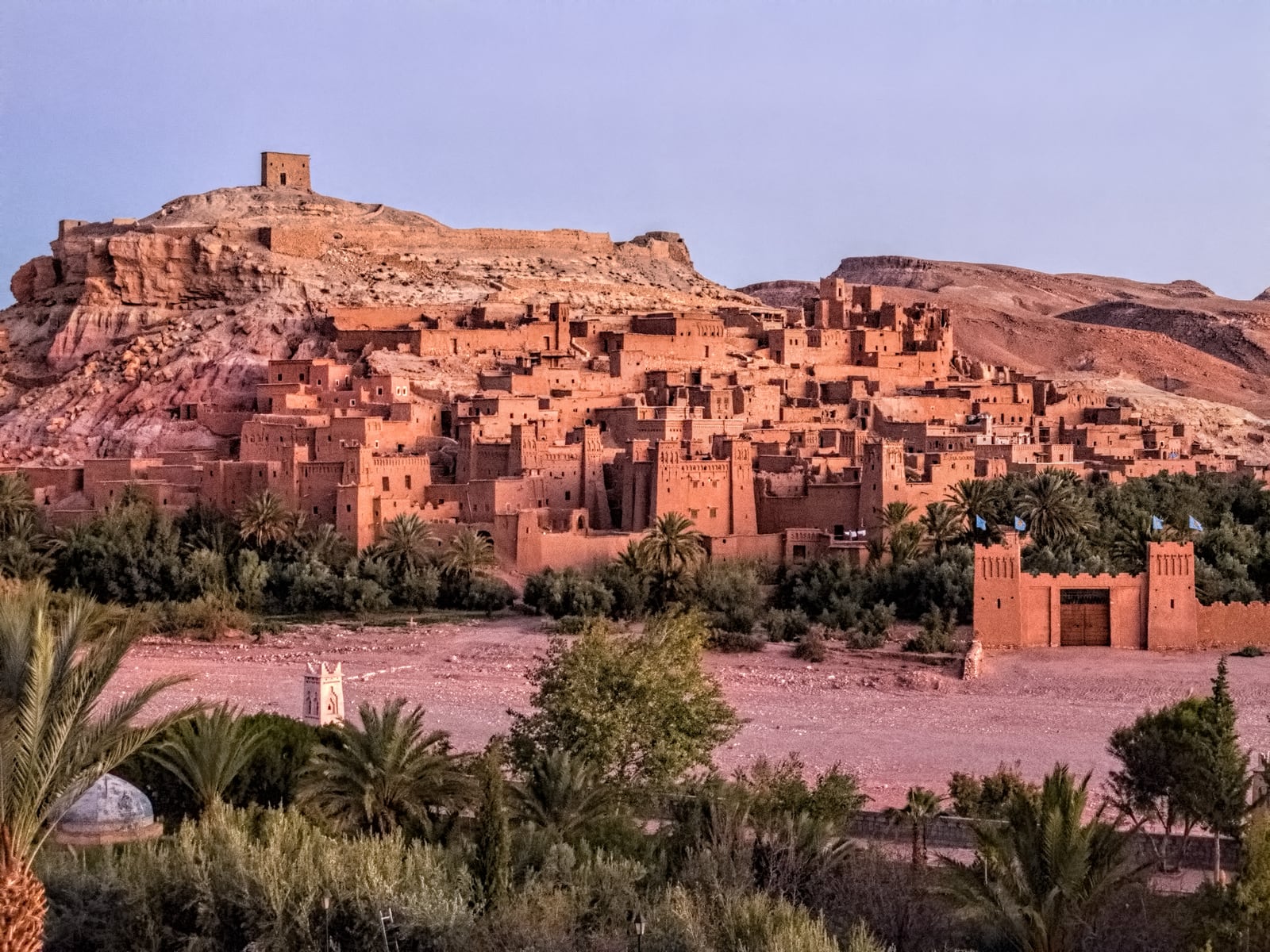
Seven nights allow a first real journey: Marrakech, one night in the Atlas, two in the desert, back via Aït Ben Haddou. Ten to twelve nights open the full imperial loop: Casablanca, Rabat, Fès, Chefchaouen, Marrakech, desert. Beyond two weeks, you can add the Atlantic coast (Essaouira, Oualidia) or the deep south (Drâa valley, Anti-Atlas).
A successful Morocco trip is never a checklist of cities — it's a rhythm, an alternation between urban intensity and silence.
When to go: the ideal calendar
Morocco can be visited year-round, but each season opens a different door. From October to April, the Sahara is at its best: mild days (20–25°C), cool nights, skies clear enough for real stargazing. It's also the best window for Marrakech and the south.
From March to June, the imperial medinas — Fès, Meknès, Marrakech — offer perfect walking light before the summer heat. From June to September, favour the Atlantic coast (Essaouira, Oualidia) and the High Atlas valleys, which stay temperate while the interior hits 40°C.
The most sought-after months — April, May, October, November — should be booked 4 to 6 months ahead to secure the best riads and camps.
Understanding Morocco: three cultures in one
Morocco is a plural country. Its Amazigh (Berber) culture is the oldest — 3,000 years of history, a language officially recognised since 2011, and a dominant presence in the Atlas, the Rif and the South. Its Arab-Muslim culture, which arrived in the 7th century, shaped the imperial cities, calligraphy, architecture and Sufi spirituality.
To that add the Andalusian heritage — families exiled from Spain in 1492 settled in Fès, Tétouan, Chefchaouen and Rabat, bringing music, gardens, craftsmanship and culinary refinement. And finally the Jewish heritage, present for over 2,000 years, still visible in the mellahs of Fès, Marrakech and Essaouira.
Travelling in Morocco with these layers in mind is what turns a postcard into a country.
Practical matters: visa, currency, health
Most European, North American and Australian travellers don't need a visa for stays under 90 days. A passport valid for six months beyond your return date is enough. The local currency is the Moroccan dirham (MAD), which cannot be exchanged abroad — you change money on arrival at the airport or at banks.
No compulsory vaccinations. Tap water isn't recommended: drink mineral water, which is widely available. Credit cards work in hotels and larger restaurants; keep cash for souks, tipping and smaller villages.
Every traveller receives a full trip pack: emergency contacts, direct numbers for your guides, riad addresses, safety guidance and cultural etiquette.
Why bespoke travel changes everything
A standard tour takes you where everyone else goes. A bespoke journey takes you where the person most like you would go. It's the difference between visiting Fès in a group of twenty and stepping in with a historian who opens the workshop of an embroiderer no guidebook mentions.
We design every itinerary from a conversation — your rhythm, your interests, your relationship to comfort, your appetite for walking or silence. Dedicated private driver, certified English or French-speaking guides, riads chosen one by one, experiences booked in advance: nothing is left to chance, yet everything remains flexible on the ground.
That's how Morocco stops being a destination and becomes a personal journey.
Read next
Let's start
dreaming
Our team responds within 2h. Every journey is a conversation — no standard forms, just your story to tell.