Desert & Adventure
The journey atlas
Not seeing your route? Every journey can be reshaped around you.
Plan my trip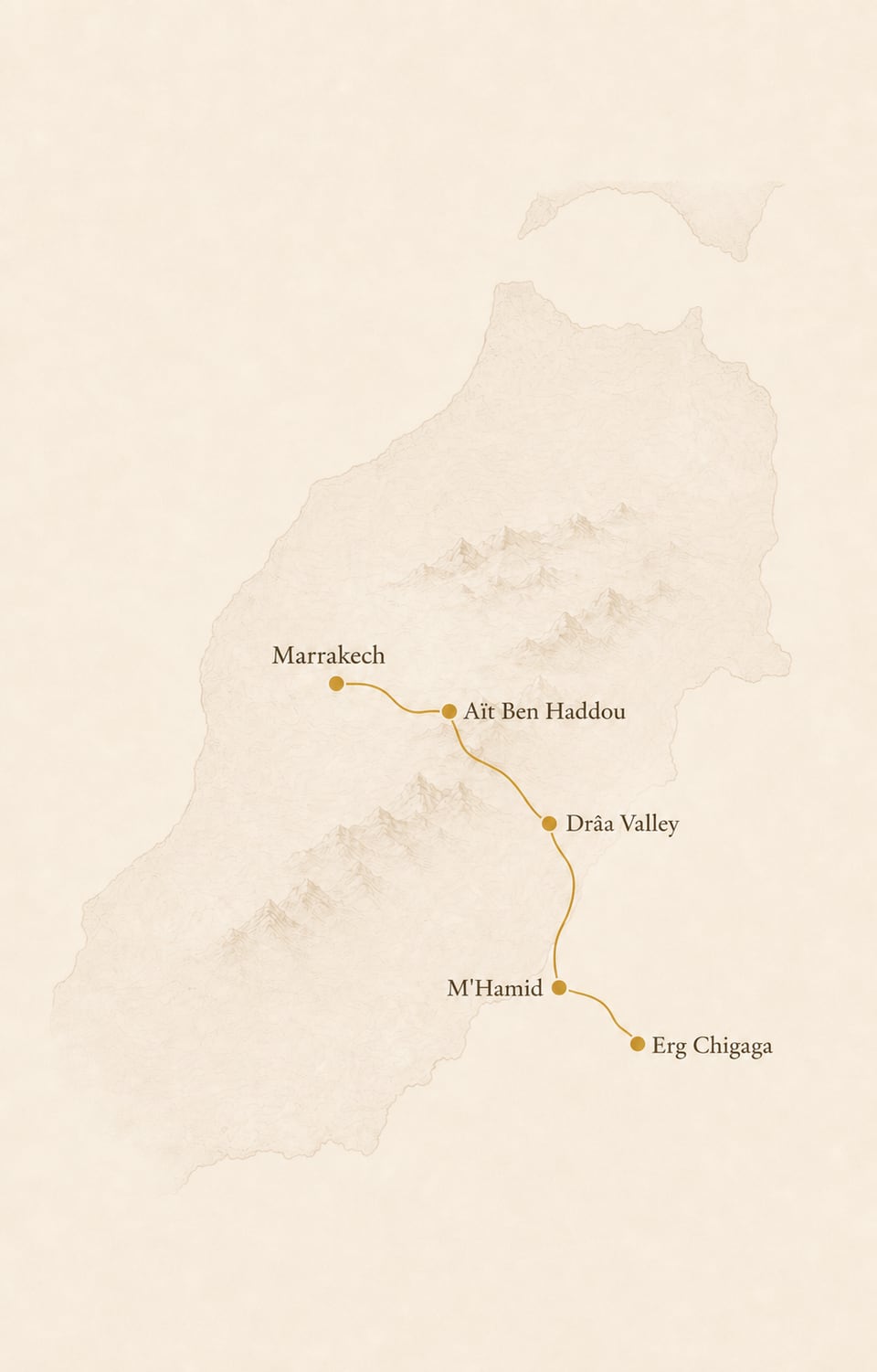
Selected journey
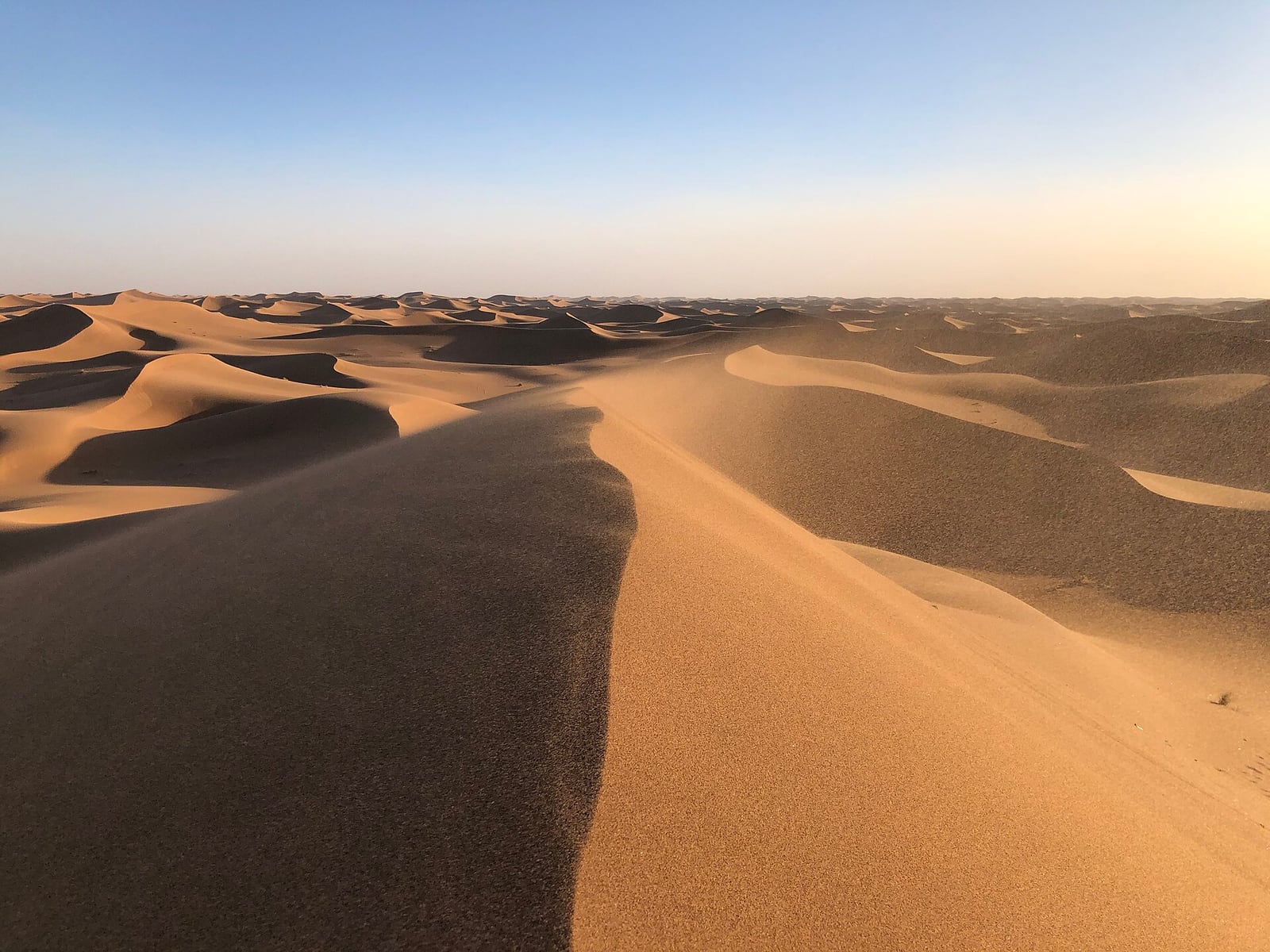
By late afternoon, the road has vanished behind you. There is only the soft rhythm of the 4x4, a horizon of amber dunes and the feeling that the world has finally fallen quiet. Somewhere beyond the next ridge, a private camp is waiting — lit by lanterns, prepared for you alone.
Customise this journeyCurated journey
This itinerary is a starting point, not a fixed programme. Every stage, stay and experience can be reshaped around your pace, interests and travel dates.
Journey highlights
Desert & Adventure
Desert & Adventure
Desert & Adventure
Desert & Adventure
The itinerary
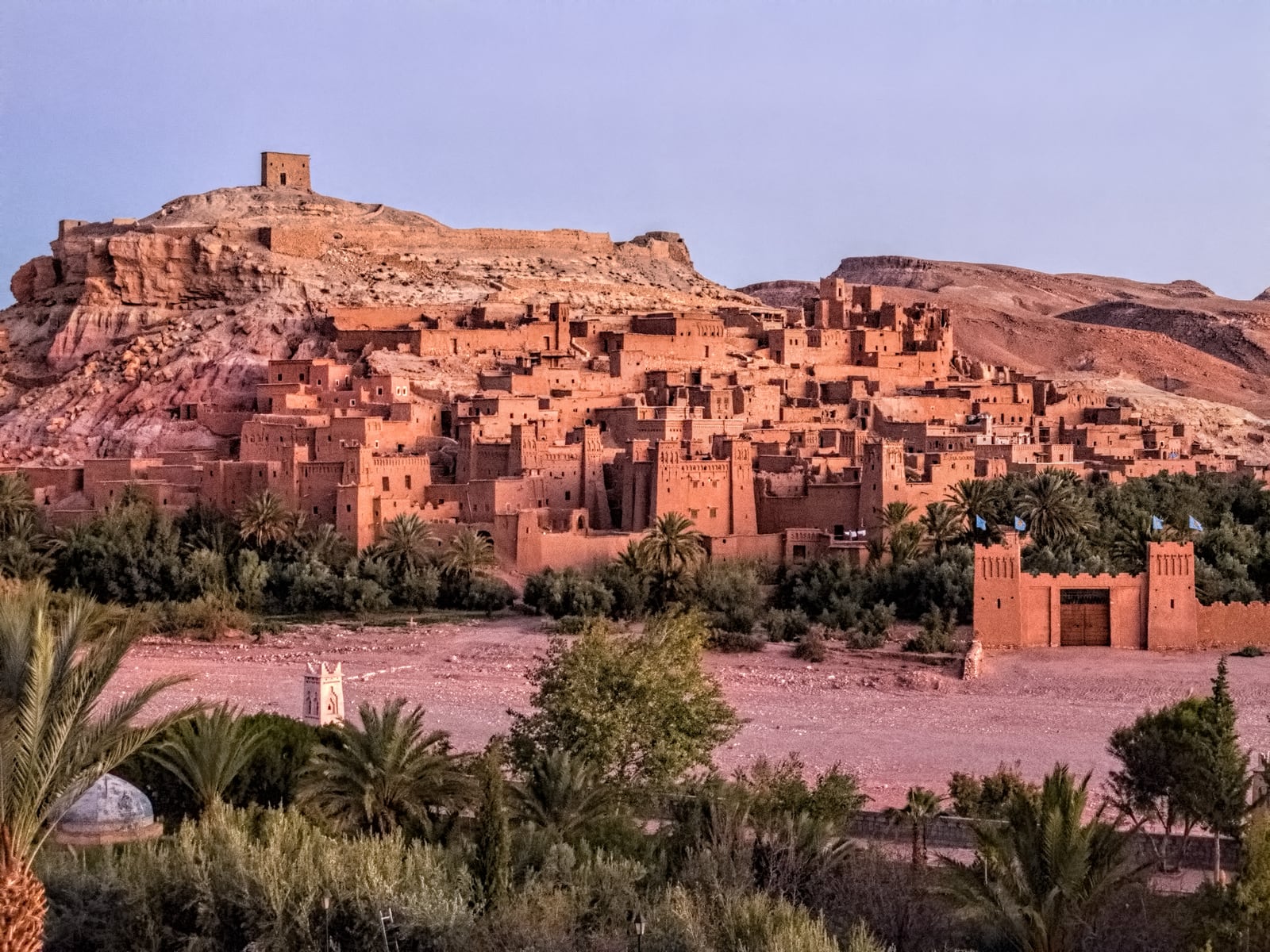
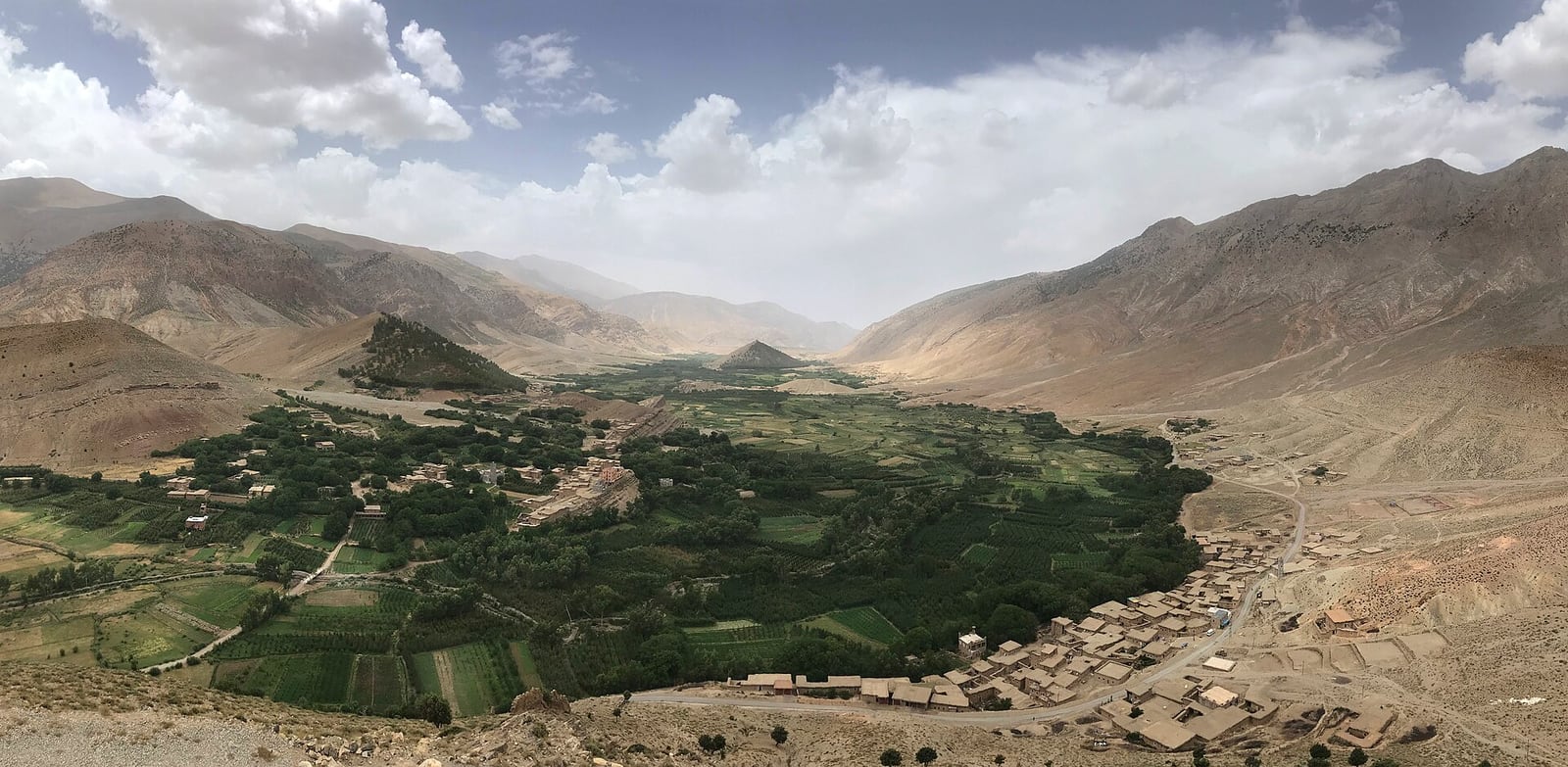
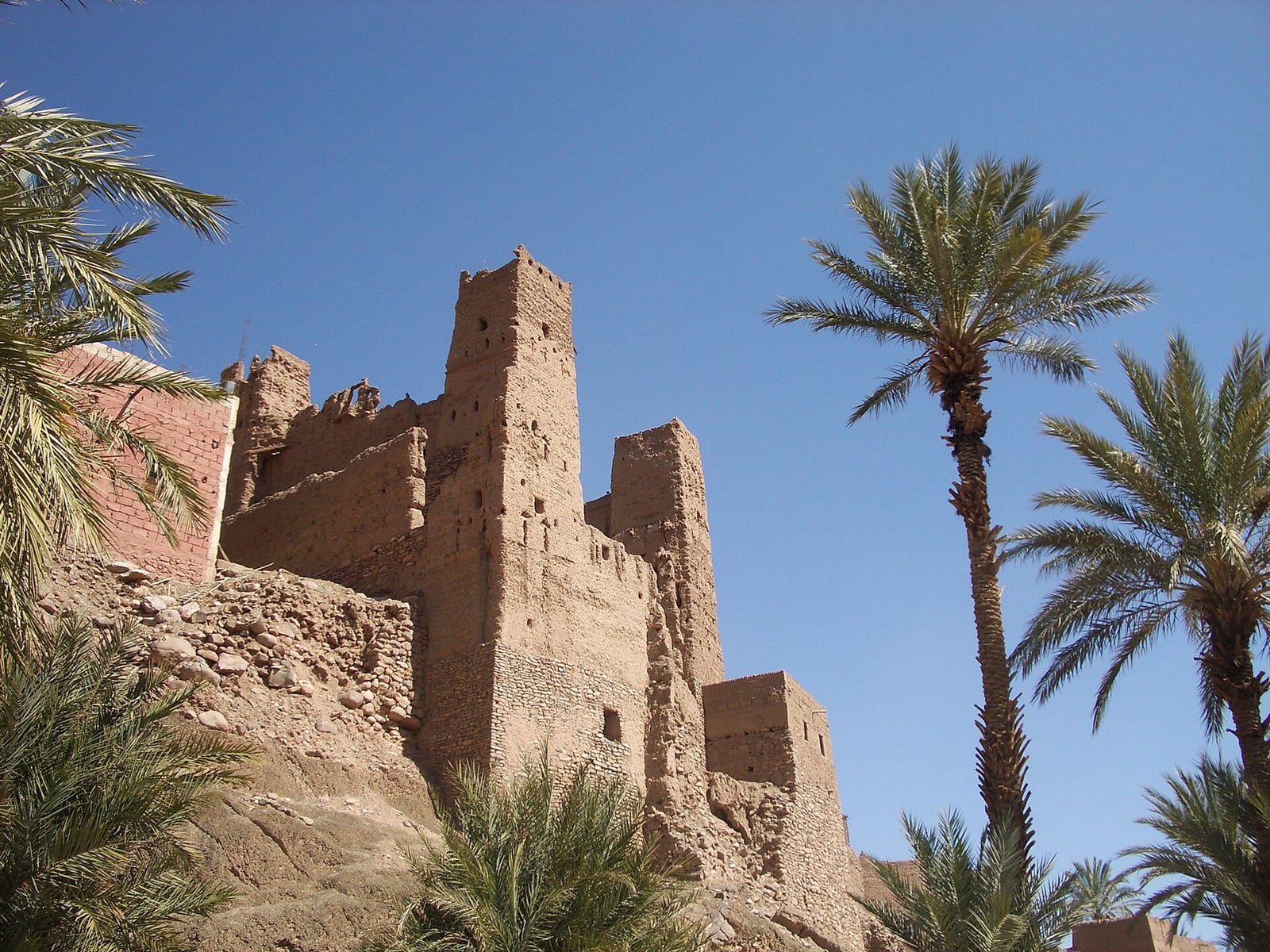
You leave Marrakech while the city is still waking. Beyond the Tizi n'Tichka pass, the landscape opens: ochre kasbahs, the green ribbon of the Drâa Valley, then M'hamid — the last village before the Sahara takes over. Here, the tyres meet the piste. For four hours your driver follows old desert tracks through stone plains and wind-shaped dunes. Phone signal fades. Conversation slows. When Erg Chigaga finally rises on the horizon, arriving feels less like reaching a destination than crossing into another world.
Suggested stayDar Ahlam
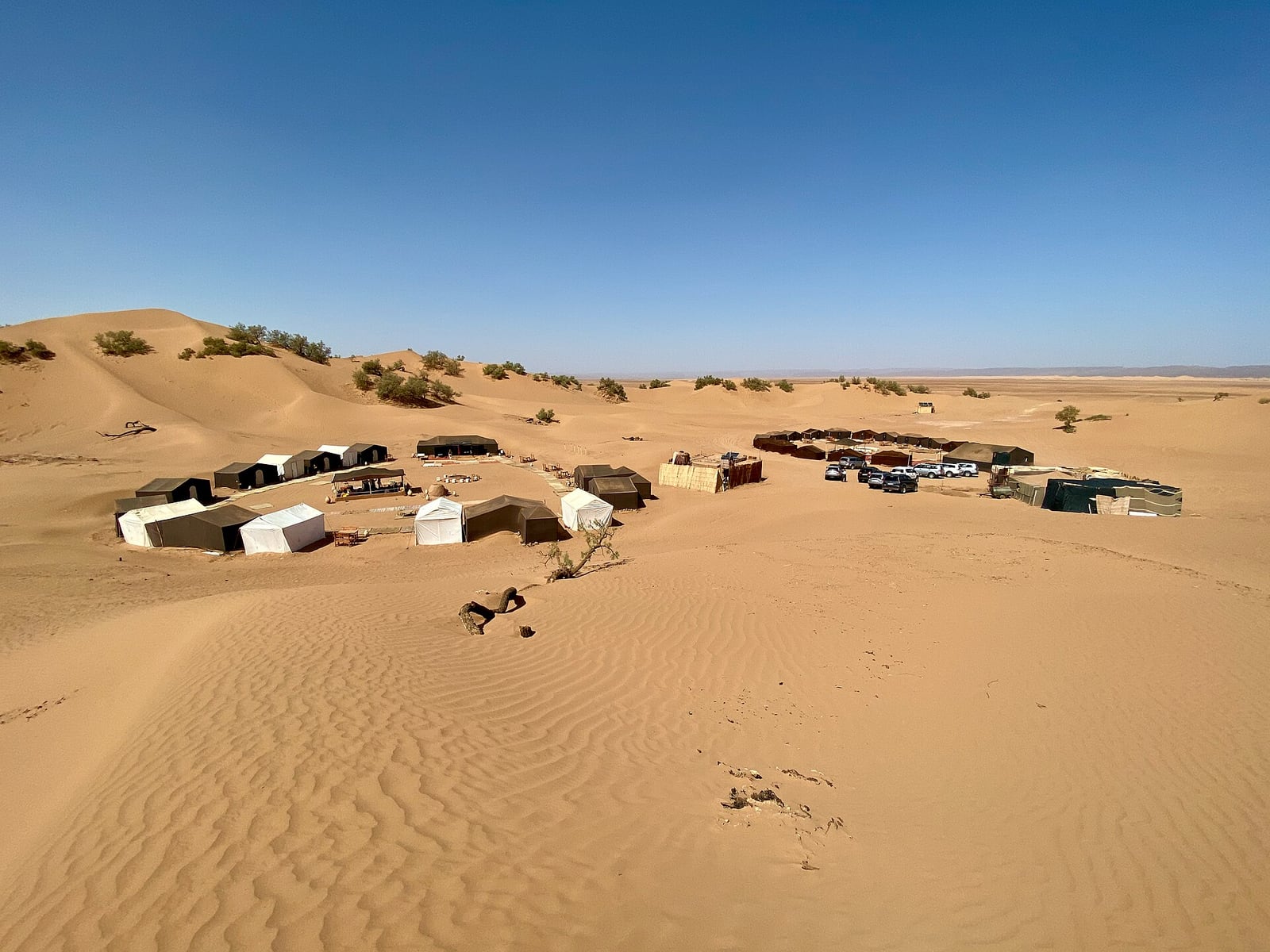
Your camp appears at the foot of the dunes: cotton-canvas tents, deep Berber rugs and lanterns beginning to glow in the dusk. There are no neighbouring camps and no distant engines — only footprints in the sand. You climb the nearest dune for sunset, then return barefoot as your travelling chef serves dinner beneath the stars. Later, beside the fire, a nomadic family shares songs carried across generations. When the final ember dims, the silence is so complete that you can hear the wind drawing new lines across the sand.
Suggested stayPrivate Erg Chigaga camp
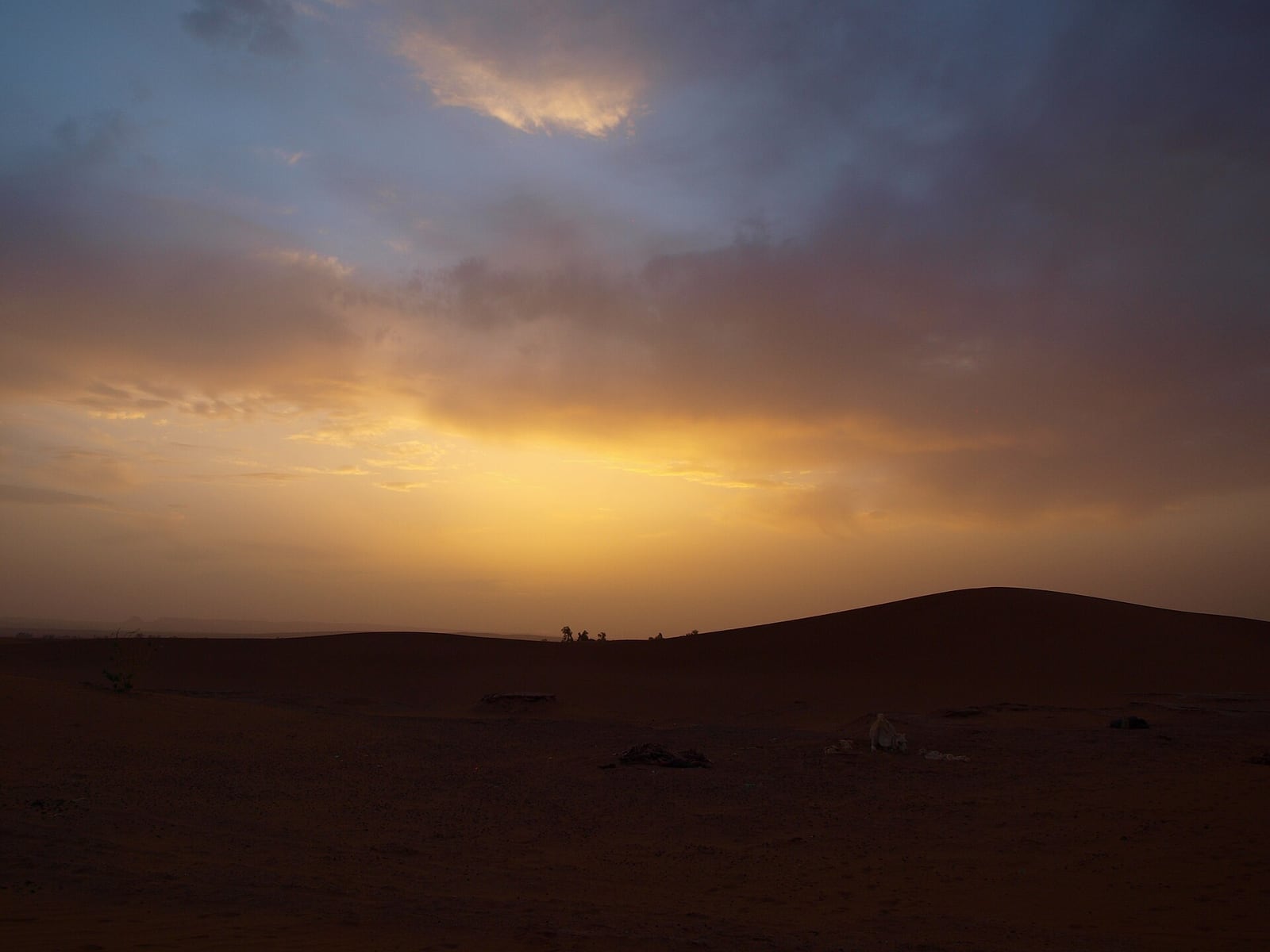
Before dawn, your guide wakes you with warm bread and mint tea. Outside, the Milky Way still stretches from one edge of the desert to the other, and an astronomer points out the constellations that once guided caravans through this emptiness. You set out as the first light touches the dunes, moving slowly on camelback while the sand turns from violet to rose to gold. Back at camp, breakfast waits in the sun. Nothing asks you to hurry. And when it is time to leave, the camp is taken down without a trace — but the stillness of Erg Chigaga travels home with you.
Places with character
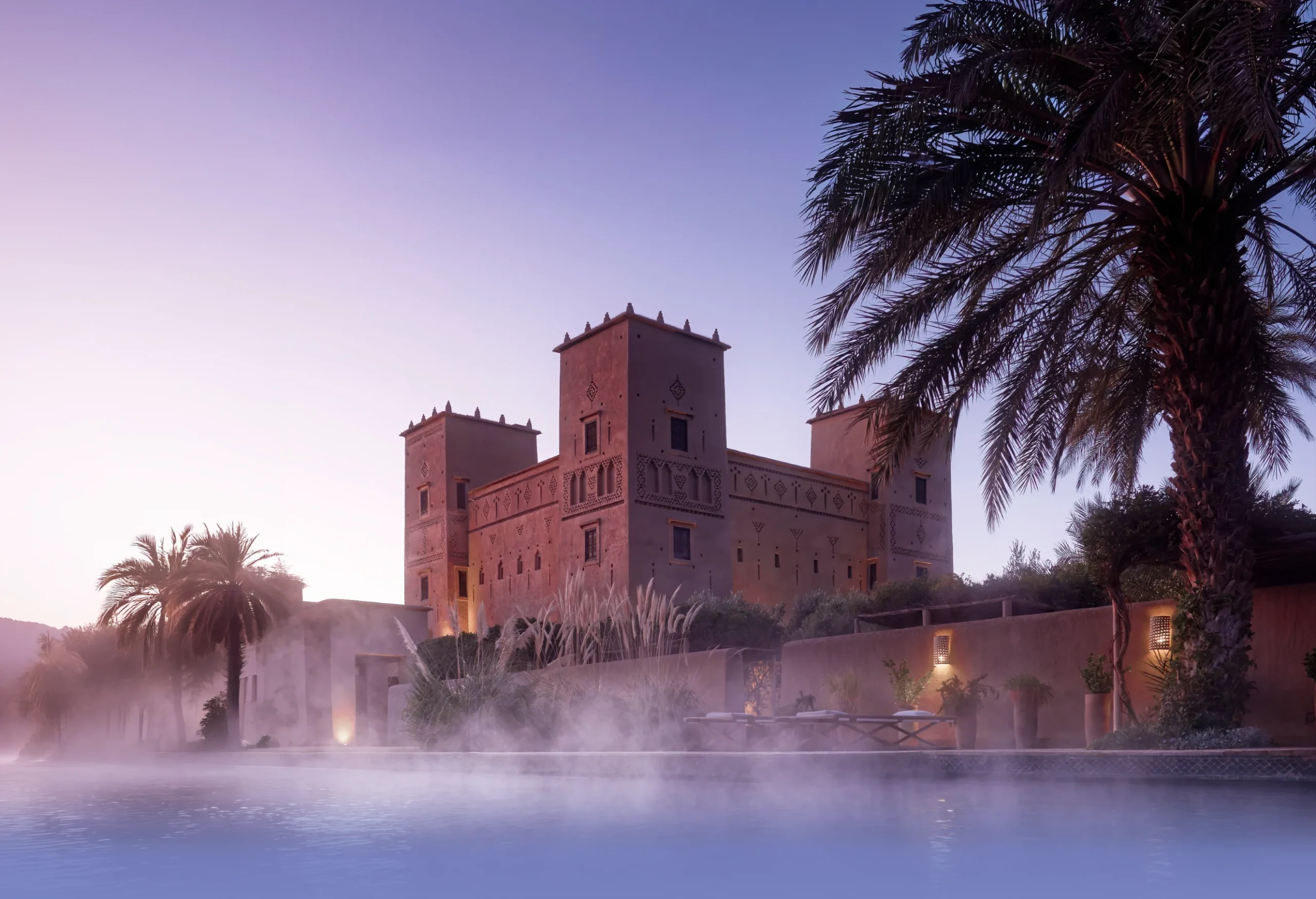
The road, until there is no road
A night that belongs only to you
This journey is only the beginning
Stay longer in the Atlas. Replace one city with the Atlantic coast. Add a private celebration or travel with your family. Every detail can be redesigned around you.
You may also like
Our team responds within 2h. Every journey is a conversation — no standard forms, just your story to tell.